Recent tales


Optimize Images X adds internationalization

Optimize Images X adds internationalization

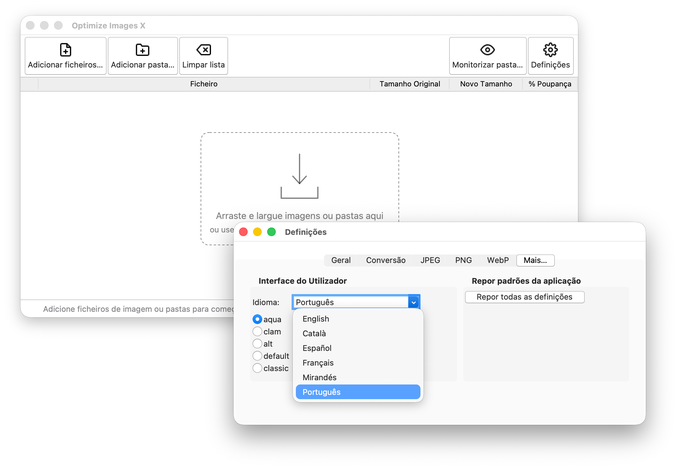
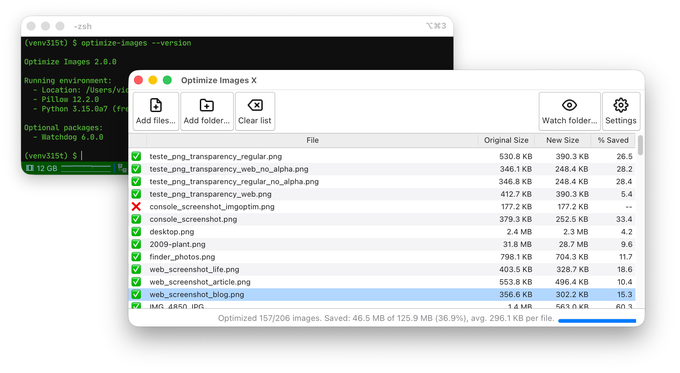
Optimize Images X, the multi-platform desktop application that helps you reduce the file size of your images on macOS, Windows and Linux, has just been updated to version 2.2.0. This new version adds full internationalization support with some initial translations, plus a handful of minor UI adjustments.
Reading time: 1 minute
Optimize Images X now supports Webp and drag and drop

Optimize Images X now supports Webp and drag and drop

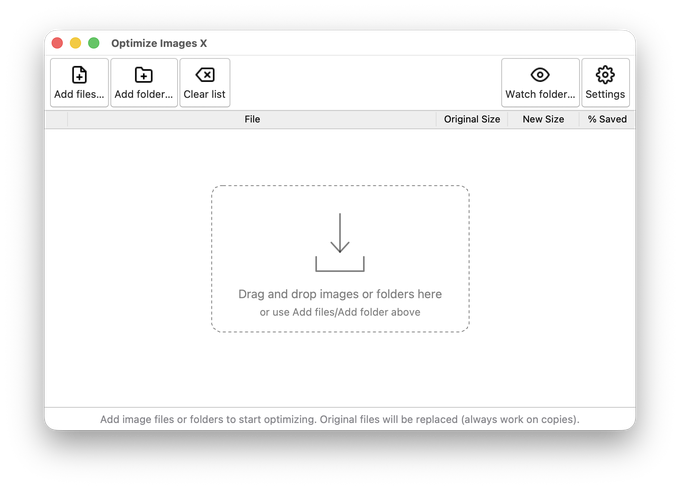
Optimize Images X, the multi-platform desktop application that helps you reduce the file size of your images on macOS, Windows and Linux, has just been updated to version 2.1.0. This new version adds drag-and-drop, conversion to more output formats, including WebP and AVIF, a new image info window with a readable EXIF report, and a PyInstaller spec file for building standalone executables.
Reading time: 3 minutes
Just updated - Optimize Images v2.1.0

Just updated - Optimize Images v2.1.0

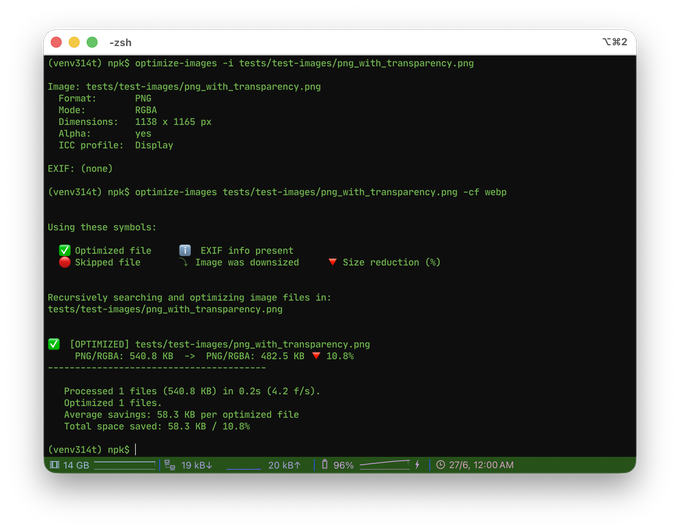
Optimize Images 2.1.0 brings native WebP support, a generalized format-conversion system, on-demand image inspection with EXIF reporting, and a new in-memory API for working with image bytes directly. It is a focused, fully backwards-compatible step forward for the command-line tool and its public API.
Reading time: 3 minutes
Just updated - both Optimize Images and Optimize Images X

Just updated - both Optimize Images and Optimize Images X

This release represents a significant milestone for both Optimize Images and Optimize Images X, marking a coordinated step forward in modernization, dependency cleanup, and internal architecture improvements across the ecosystem.
Reading time: 2 minutes
Book review — Apps and Services with .Net 8 (2nd Edition), by Mark J. Price

Book review — Apps and Services with .Net 8 (2nd Edition), by Mark J. Price

For a long time, I have been writing here about Python, Python projects, and Python books. It was one of my first programming languages, and the first one I fell in love with. So much so that I have used it as my go-to option for personal side projects, quick prototyping, and algorithm study. However, my professional life as a software developer has been based mostly on C# and .NET. At first, it felt like an overly verbose version of Python; over time, though, it became progressively more natural to me—so much so that I no longer prefer one over the other.
Reading time: 8 minutes
Converting Base64 strings to files without writing code

Converting Base64 strings to files without writing code

I recently stumbled upon a situation where I needed to quickly convert a Base64 string coming from a web api and save it into a file in disk in order to inspect its contents. Sure, I could have spun up a small program in C# or Python. But honestly, that felt like an overkill for what was essentially a one-off task. In the past I had used an online Base64 converter for a similar task, so it crossed my mind, but sharing potentially sensitive data with unknown third-party services didn’t feel right. So, I searched for an alternative. Surely, there had to be an simpler, more direct solution.
Reading time: 3 minutes